Pages

Monday, 4 November 2013

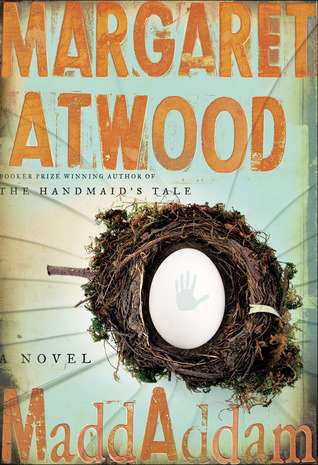
The Sadness of a Series: Margaret Atwood's "Maddaddam" (book review)

Trilogies fill me with a weird sense of regret.  There is a certain sadness that comes with finishing the story, and knowing that's there all there is and all there is going to be. No more hope for sequels when sequels have already been had.

In the case of Margaret Atwood's Oryx and Crake, I never really expected there to be a sequel.  Sure it has a cliffhanger ending, but I thought the ending was perfectly suited to the tone and subject matter of the story and was in no need of further explanation.  Yet I eagerly devoured both The Year of the Flood and MaddAddam, the latter of the two being my read for this month's bookclub, where our genre (so to speak) was women writers.


Loose ends are sewn up nicely in MaddAddam, which unifies the stories found in the previous two volumes and brings together the Crakers, Snowman/Jimmy, and the MaddAddamites.  Snowman/Jimmy, who spent a good portion of the last two books hovering around death's door, is nursed back to health and plays a pivotal role (albeit somewhat inadvertently) in uniting the Crakers and MaddAddamites in the common goal of protecting themselves from the vicious criminal painballers.  I really enjoyed how the book focused on the perspective of Toby, who was introduced and served as one of the main characters in the previous book.  It was also wonderful to finally get a Craker perspective in the form of Blackbeard.  In the early part of this book, I found the Crakers too be too much comic relief (who is Fuck?  hee hee), but Blackbeard's point-of-view helps to balance this out a bit.

And so now comes the mourning.  Well, mourning is maybe a little dramatic.  Now comes the wistfulness of knowing you've come to the end of a great story.  If you haven't read any of this trilogy, I highly recommend it, the first book Oryx and Crake is the best of the bunch and is really an outstanding work of dystopian fiction.  As always, I recommend these books most of all to people who are not Margaret Atwood fans.  There is something universal about these books in their appeal that reaches even to those (like me) who were force-fed Atwood poetry in high school and disliked it.

Trust me on this one.

Monday, 23 September 2013

Vegan Chickpea Donairs recipe

So I am impressed with myself today on two accounts.
Firstly, this blog has over 10,000 views, YAY!
Secondly, I am very proud to introduce my FIRST EVER RECIPE that I actually made up, out of my own head, all by myself!
I am known to be a good cook in my social circles, but I've been a good cook of the recipes of others.  This is the first real recipe I've ever created and I'm really quite proud of it because it was astoundingly delicious.  And also really easy, much moreso than the genuine article, and no ick-factor that comes with "mystery meat".

Anyway, enjoy and please do make it and leave some feedback in the comments!  I'd like to know what tweaks you've made.

So without further ado, I present:


Vegan Chickpea Donairs
Serves 2-4 people
A thing of beauty is a joy forever.  Or at least until you eat it.

 Ingredients:
  • 4-6 pitas
  • 2 cups cooked/canned chickpeas
  • 4 tbsp soy sauce/tamari
  • 3 tbsp lemon juice
  • 2 tsp oregano
  • 1 tsp black pepper
  • 1 tsp italian seasoning
  • 1/2 tsp garlic powder
  • 1/2 tsp onion powder
  • 1/4 tsp cayenne pepper
  • Vegetables of your choice for toppings - Could include peppers, tomatoes, lettuce, pickles, etc.
  • A batch of the awesome vegan donair sauce you can find here.

Instructions:
  1. Pre-heat oven to 350.
  2. In a large bowl, mash the chickpeas with a potato masher.
  3. In a small bowl, whisk together the soy sauce, lemon juice and spices.  Pour the liquid over the chickpeas and mix well.
  4. Line a baking sheet with parchment paper.  Spread the chickpea mixture on the lined sheet and bake for 15 minutes.
  5. While the chickpeas are cooking, make your donair sauce and chop up whatever veggies you want for toppings.
  6. When everything is done cooking, layer the donair chickpeas, veggies and sauce on your pita.  Roll up and enjoy!  This recipe is messy though, so you may want to give your donair a tinfoil diaper like they do at the store if you're planning on not eating it over a plate!
And that's all there is to it.  :)  It's a tasty, spicy, filling recipe that went over really well at my house, I hope you enjoy it too.

Cheers

Monday, 16 September 2013

When subject matter gets serious: a pair of book reviews

While I like to consider myself a "jane of all genres", I have often been diagnosed as a great reader of adventures and comedy.

However, this past week I found myself keeping company with two VERY heavy, emotional and deeply saddening works of fiction.  This was unusual for me not because the books were sad (call  me a cold-hearted bitch but I really do enjoy a good unhappy ending), but because I will rarely follow a heavy, emotional book with a second book of the same nature.  I typically like to break them up and intersperse some lighthearted children's works or maybe a cute graphic novel in between these emotional heavyweights.  Just for the sake of my emotional health, and my supply of tissue.

But without further ado, I present the two reviews.  The first is a classic of Russian fiction and criticism of Stalinist repression; the second is a work of YA fiction that forces the reader to confront their deepest fears.


One Day in the Life of Ivan Denisovich by Alexander Solzhenitsyn

This book was my pick for book club this month, for which our selected genre was fiction in translation.  I have developed a great love for mid-20th century Russian fiction and satire due to the wonderful, insightful writings of Mikhail Bulgakov.  Beyond his most widely read The Master and Margarita, Bulgakov has a substantial list of works which were not published until long after his early death, due to his overwhelming criticisms of life in the Stalin-ruled USSR.  With Bulgakov as the foundation for my experience of Russian literature, I had some expectations going into One Day.  And all of my expectations were met and greatly exceeded.  One Day takes the reader into the bitter, unmerciful world of a Soviet prison camp through the eyes of Ivan Denisovich Shukov, a former soldier who is imprisoned after being accused of going AWOL.  By the time the reader is introduced to Ivan, he has already been incarcerated for several years.  Solzhenitsyn spares nothing in his description of camp life, from Ivan's rejection at the medical facility to the meagre meals and bitter cold in which the imprisoned men are forced to work.  But the part that really hits the reader square in the gut and conscience is how grateful Ivan is that this day of his is a particularly good one.  He is so thankful that he managed to stay out of solitary confinement and received an extra tiny piece of black bread.  The last few pages of this book describe how Ivan drops off to sleep in a state of contentment.  This is so difficult for the reader to digest after reading the descriptions of all the awful abuses of camp life.  The contrast pulls on the emotions and adds even more to the reality of the experience and the appreciation of those awful circumstances that Solzhenitsyn instills in the reader.  Overall, this book was a difficult read due to the all too true descriptions and subject matter of the work, but absolutely worth reading. 


A Monster Calls by Patrick Ness
 
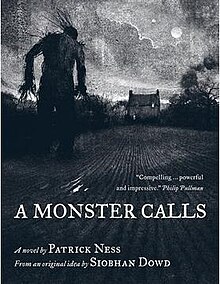
 Having read Patrick Ness' Chaos Walking triology, I also had expectations when approaching A Monster Calls, which I had been meaning to read for a very long time.  A Monster Calls is just so incredibly different from Ness' other work, I quickly disregarded what I remembered from those books and looked on this one with fresh eyes.  In this disturbing teen read, a 13-year-old boy is visited by a monster which forces him to confront the disturbing realities of his life.  And I can't tell you anymore than that without completely spoiling the book, which I wouldn't want to do because EVERYONE should read it.  Books don't often make me cry, but this one had me darn close at the end.  The writing is lyrical even though it is told from a 13-year-old perspective, and the accompanying illustrations are perfectly suited to the tone of the story.  The story is simultaneously beautiful and horrifying, it is truly a unique work of fiction which conquers very difficult subject matter without being trite or melodramatic.  The message of the story is incredible, and I very honestly would recommend this book to anyone who is capable of feeling feelings, because A Monster Calls will make you have so many of them.

So after all that strenuous emotional reading, what am I reading now?  I'm working on some non-fiction reads on information consumption for an online course I'm taking.  Talk about switching gears!

Ciao for now.
Monday, 9 September 2013

The Harvest (round 2!) - end of the gardening season

So it's September!  It's now dark outside when I get up for work and there's a distinct chill in the air in the AM too.  So it's time for an (almost) last garden update now that we are officially in "harvest season".

Now I say "almost" last update because the only thing still growing and producing right now is the pumpkin plant.  I'm planning to leave my mini-pumpkins grow until the frost comes, so hopefully they'll have another good solid couple of weeks to a month to get some size on them.  The largest right now is probably about 5 inches in diameter.

Anyway, on with the harvest!

Lone zucchini
So my zucchini plant only produced this one lone zucchini so far.  Technically it could still do more but I don't think it will.  The zucchini plant spent the whole summer looking thoroughly unhappy and unhealthy.  And almost every time a new zucchini would form, it would turn yellow, then black.  I don't know if that was due to too much water or not enough heat or what the culprit is.  Usually you don't have to worry about zucchinis not growing, the problem is typically catching and picking them before they get ridiculously over-sized.  So not a great year for these but glad I at least got one.

Wee onions

Now these were technically supposed to be BULB onions.  They never really grew too well either, but I think their problem was that they were shaded by a larger plant.  I would give them a sunnier bit of real estate next year.  They grew OK but they are much more the size of pearl or pickling onions than a bulb.

Last of the lettuce


 So in the end the lettuce yield for this year was three large heads.  I'm not sure why only part of the row grew, but I think it might have been a similar case to the onions where shade was a factor. 

Obscene amounts of parsley


 One plant that was hugely productive this year was the parsley plant.  Thank god I only planted one.  It was a starter that I put right beside the back step in it's own little corner.  It did tremendously well, and along with having fresh parsley all summer, I had a huge amount for dehydrating.  A full dehydrator's worth gave me one of those little ziploc snack size bags of parsley.  Which is a lot, and will probably last me forever. 

More carrots


With one row of carrots planted, I ended up with three pullings of about this amount, which is two solid handfulls each.  Which is a pretty decent yield in my estimation.  Next year I would thin them out a bit more to increase their size (I don't use any plant foods or fertilizers or chemicals to try to achieve this, my garden is treated only with compost).

Cukes!


  One set of plants that really surprised me were the cucumbers.  I had given them up for dead when they were looking really sick in July, but four of the six came back and produced some cute little cukes for me.  They are small but incredibly tasty.

The letdown...


This is the entirety of the yield from my pepper plants.  On the left is the single bell pepper that was produced, and on the right are my two teensy jalapenos from my so-called "early" plant.  It was just really REALLY not a good year for peppers, they need significant stretches of hot weather to get the job done, and full-blown summer never really happened in Alberta this year.  So it's a bit disappointing that this is all that grew, but not really unexpected.


So that is the end of the season for my tiny little garden!  Overall, I would rate year one as a good experience despite the soggy and cool weather.  Hopefully next year we will have a bit better of a growing season and I'll be able to try a few more plants.

An update on the pumpkins will be forthcoming, stay tuned!


Thursday, 8 August 2013

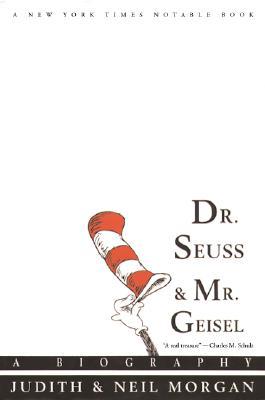
Dr. Seuss & Mr. Geisel (book review)

I don't often read biography.  Prior to picking up Dr. Seuss & Mr. Geisel by Judith & Neil Morgan for last month's book club, I think the last time I read a biography was when I was doing my undergrad (almost 10 years ago now).  Usually this just isn't a genre that catches my eye at the library.  I'm a prolific reader of fiction, and non-fiction has to be really, truly special in order to get read.  Now I probably should be striving to advance variety in my interests and be an eclectic reader of all the things, but dammit, I like what I like.

Regardless, here is a short review of the aforementioned Seuss biography.


When we pulled biography as our theme for July's book club, my initial desire was to read a book about my favorite silent film actor, Buster Keaton.  However, the biography at the library was a coffee table book, and I had rode my bike that day, so the massive, picture-laden tome was out of the question.  Instead I put in an ILL for a biography on my favorite children's authour, Dr. Seuss.

Written about five years after his death in 1991, Dr. Seuss & Mr. Geisel presents an easy-to-understand, chronological view of the life of the highly productive and much loved children's book authour.  There are about five pages of photographs included with the book, which are also ordered chronologically and show the development of Ted Geisel from imaginative boy to the man who captured all of our imaginations.

As with many people who lived across the span of the 20th century, what is nearly as interesting as the biographical aspects of Ted's life are the glimpses into the society in which he grew up and lived.  As a descendent of German immigrants, we see how racism and bullying permeated American society during the World Wars and impacted Ted's personality.  The rise and fall of prohibition is also well-documented here, through the impact it held for Ted's father and grandfather, who worked as brewers.  Even the advent of various technologies, from typewriter to electric typewriter to computer, occurred during Ted's lifetime as held sway over his works.  The two Morgans do an excellent job of demonstrating not only the development of Ted as artist and writer but also just how much changed in America and around the world over the course of Ted's lifetime.

The only place I hold issue with this biography is in its tendancy to mince words and be a bit euphemistic when it comes to Ted's failings and shortcomings.  The big one being that the book does not explicitly say that he began a relationship with Audrey Dimond while they were both still married to other people, and even which contributed to the suicide of his first wife, Helen Palmer.  This is simply implied.  I also didn't like how Helen's suicide was treated as some sort of noble act, as opposed to it being the death of a woman who was not only heartbroken but who had suffered with a painful ailment for over ten years.  While I understand that it is a biography about Ted, I felt it was insensitive to treat Helen's death as simply a means to progress and advance Ted's life and his relationship with Audrey.

So in conclusion, I'm not sure how to rate this book as far as biographies go due to a lack of benchmarks in my own reading experience.  I very much enjoyed the book overall, and it's merits as a highly-readable and accessible biography outweigh some of the issues I took with the authours being overly tactful.  Overall, I would recommend this biography for any Seuss fan who wants to find out a bit more about the man and his beloved characters which have entertained both children and adults for several generations. 

Thursday, 25 July 2013

The Harvest (round 1!) - a garden update

So I went away for a week to Manitoba for my brother-in-law's wedding, and came back to (surprise, surprise!) a garden that had turned into a giant weed bed (AGAIN).  So after extracting the unwanteds, I thought it was time to give another update on the state of affairs, seeing as we are actually at the point of being able to eat things now!

So my previously floppy pea plants are now tall enough to grip onto the bannister on the back steps, so that is good news.  No pods up as of yet, but there are quite a few nice purple flowers waiting for a bee to do them a favor...

Pea plants.  :)


Beans and lettuce plants

The bean plants are absolutely huge!   They are really taking over and getting a bit top-heavy so I might have to cage them if they get any fuller.  There were lots of beans ready to be picked when we got back, and lots more at varying stages of development.  I think I'll probably get a couple more harvests off these plants, they are very healthy.  You can also see in this picture I have three full heads of lettuce.  Despite replanting the row, there were never any more baby lettuce plants.  I'm really not sure why, it might be that by the time I got around to doing the second planting the bean plants were already generating so much shade that the lettuce couldn't get started.

First harvest of green beans, about 3.5 oz.

I decided to pull off all of the swiss chard, due largely to the fact that it was pretty much covered by the huge bean plants (guess I planted them too close together, note for next year).

All the chard.

This was not a huge crop, and as you might be able to see from this photo, there was a bit of hail damage incurred.  (Hail is also the reasons their are no photos of spinach, it was pretty trashed...).  So after this was picked over and washed, this was the results:

Ready to cook and eat.  About 1.5 oz harvested.

So not really the prettiest chard ever, or the biggest yield.  I need to rethink how I planted this crop for next year, if anyone has any chard tips, I'll gladly take them!

On to the rest of the crops...

The cherry tomato plant.

Here is the current state of the cherry tomato plant previously described as "HUGE".  It's a lot less full now, again due to hail damage.  Some branches in the middle were dying out and had to be removed.  But still looking at a pretty good yield, there are lots of tomatoes on here and some are even starting to ripen up.

Them other guys
The carrots look a little sad here because I just thinned them, they were planted waaaaay too thick.  Down in front is a strawberry plant which is giving off about 400 runner babies.  Tempted to cut and plant the new babies, I would very much like if the plant would quit making babies and go back to making fruit!  On the far right are the jalapeno and bell pepper plants, both still not doing great, I think next year I might pot them and put them under the house overhang to keep them drier.  However there is a teensy pepper on the bell plant so they aren't a total loss.  The roma tomato is very slowly coming along too.

And now for the gratutious money shot:

Out of control large-ness

My parsley plant is a total beast.  I've pulled it twice already and it's still a bushy monster.  I am seriously going to have to work on giving some away (any takers?) or figure out how to dry this stuff up and store it for later.  Might have to borrow mom's dehydrator.

No photos of the pumpkins and zucchini this time, but they are coming along fairly merrily despite being choked with weeds.

More updates as I get more stuff to eat!  :)

Tuesday, 2 July 2013

China Mieville's "Un Lun Dun" (book review)

Occasionally, I come across a book that absolutely reaffirms my love for reading and reminds me that it is not only an awesome hobby, but one that has the ability to completely transfix and commandeer my regular life while I'm in its sway.  To the dereliction of duties like keeping the house.  Or showering.  Or eating.  Or sleeping...

China Mieville's Un Lun Dun is one of those awesome books.

Creepy cover though.

I had been waiting for a while to read Un Lun Dun, which was hanging out on my "to read" list, and finally got around to it just recently.  And I am so incredibly glad I did.  This book absolutely pulled me in; it was one of those books that I quite literally had difficulty putting down. It seemed that no matter what I was doing, I was thinking of ways to solve the problems of its characters and anticipating storyline twists.

What I think is so enchanting about Un Lun Dun is that the story is based around familiar tropes, but goes a completely different route with them.  The so called "chosen one" (shwazzy!) and her best friend are pulled into an alternate world, where the chosen one is expected to save everyone from a maniacal, conscious mass of pollution known as the Smog.  But when Zanna the chosen one falls flat on her face almost immediately out of the gates, and it becomes the task of her "sidekick" and best friend Deeba to become the un-chosen hero and save the parallel world of UnLondon.  I loved this because it is so relateable for the main audience of this book, younger teens.  These teens can very much understand the position of someone who feels overshadowed by their peers, and feel powerless to change their situation.  It is really refreshing to get to enjoy this special adventure from the perspective not of that special, singled out individual (think Percy Jackson, Harry Potter, etc.), but of a very normal and ordinary girl. Many tasks and exciting adventures later, it is Deeba's brain and her quick thinking that save the day, adding yet another layer of appeal as she did not require any special supernatural powers to succeed, only her own wits.  These features add greatly to the realism of what is definitely a fantasy work.  The character of Deeba is so realistic and maintains her normalness despite keeping company with a diverse cast of oddities including half-ghosts, personified words, killer giraffes and animate milk cartons. 

The book might be perhaps a bit too scary for a younger crowd, under the age of about eight, but the length of the work (about 220 pages) might also be prohibitive for that age group.  This read is ideal for the younger teen, and for anyone who really likes a good adventure with a healthy slice of nail-biting suspense and the occasional bit of humour.  I'm really looking forward to reading some of China Mieville's other works, and hope they are as wonderful and exciting as Un Lun Dun.