Pages

Showing posts with label reviews. Show all posts

Tuesday, 28 April 2015

Graphic goodness: an Akira book review

As any anime fan knows, the Akira anime is widely considered to be a classic.  The animation and quality of the storytelling was groundbreaking at a time when anime was going through a "cheap" phase (think Sailor Moon... ugh).  It still looks good, even today, almost 30 years after it's release.
But before the anime, there was of course the manga.  And all six volumes of Katsuhiro Otomo's Akira ended up being my read for book club this month.


I'm going to do my best to not make this simply a comparison of the manga to the anime.  Because let me say right up front, as much as Akira is an amazing film, it absolutely pales in comparison to the incredible genius of the manga.  The movie is so different as to be hardly even the same story.  Many events are skipped, or even replaced by entirely different events in the film.  Characters of significant importance in the books are nearly or totally missing from the film.  They are just not the same thing, and that's about as much as I want to say about that.

Back to the manga.  Akira was dystopian before dystopian was cool, a story about a Tokyo which experiences a societal collapse after an unexplained war.  Lurking in the streets we find the protagonist Kaneda (a delinquent teen biker) and his gang of fellow miscreants, including the aggressive young Tetsuo.  Kaneda and Tetsuo become wrapped up in a complex web of government secrets, revolutionaries and supernaturally powered children after Tetsuo has a close encounter with the latter.   Teaming up with revolutionary Kei and her aunt Chiyoko, Kaneda tries to both simultaneously reach out to, and attempt to destroy Tetsuo after he unleashes the incredible destructive force of Akira.

Spanning over 1800 pages, the story arc for Akira is very long, complex, and highly detailed.  In addition to the adventures (and occasional antics) of Kaneda and Kei, we also see perspectives of the Colonel and his military forces, as well as scientists who would attempt to control the Akira phenomena. In addition to the incredibly rich storytelling and plot, the visuals in Akira are simultaneously beautiful and highly disturbing.  There are scenes of beautiful cityscapes with incredible detail, as well as scenes of stomach-churing gore.  Taken together, this makes Akira  an enticing, fascinating, and very worthwhile read, but not one for the faint of heart.

Overall, I found Akira to be one of the most exceptional graphic novels I have ever read.  The detail, incredible storyline, fast-paced plot (for the most part, Book 4 drags a little bit), and beautiful art all combine to make for an exciting story.  I highly recommend Akira to anyone who enjoys graphic novels, or a nice violent dystopian thriller.

Tuesday, 25 November 2014

Christopher Moore's "The Stupidest Angel" (book review)


I'm back!

Long time no blogging, I know.  Various things and stuff came up, you know, REAL LIFE and all that. I know that's no excuse to not talk about books, but I'm going to use it anyway.

Regardless, it's the festive season, hence the reading of a festive book for book club.  So for this month I selected a read from the ever hilarious Christopher Moore: The Stupidest Angel: A Heartwarming Tale of Christmas Terror.

Disclaimer: I'm a particularly HUGE fan of Christopher Moore.  His work has made me laugh tea out of my nose on more than one occasion.  And as funny as his books are to read, they are even BETTER in audiobook format.  I used to listen to them on my hour-long commute to my student job the last time I was in university, and nearly had to pull over a few times while listening to A Dirty Job so I didn't cause an accident/pee myself.

Love him.  Love his books.  And sad for me, this is the only one I had left to read, so no more fabulous Christopher Moore books for me until he writes another one.

So then, this one in particular.  We find ourselves back once again in Pine Cove (the setting of The Lust Lizard of Melancholy Cove) with it's cast of idiosyncratic residents getting ready to celebrate Christmas.  Until Santa takes a shovel in the throat.  What follows is a chaotic, over-the-top romp with horny scientists, a literal-minded angel, and everyone's favorite stoner police officer.  Fans of Moore's work will find lots to love here, there are characters returning not only from Lust Lizard, but also from The Island of the Sequined Love Nun and Lamb.  Moore's slapstick style and casual cussing contrast well with the typical joy and festivity associated with the holiday season.  Now I might be giving away a plot twist here, but there are zombies in The Stupidest Angel. It's important to remember that this was written well before zombies became a trite and overdone cliche.  And besides, they aren't really your regular plague-resurrected zombies anyway.  These ones are a bit more intelligent and vengeful.  :)

My only issue with this book is the ending.  But as frustrating as I found it, the deus ex machina outcome actually fits really well considering we're dealing with an angel as one of the main characters of the story.  Suspend your disbelief at that point, if you didn't already do so for the zombies or the talking bat.

Cheers, and happy holidays.

Monday, 18 August 2014

YRCA 2015: "The Reluctant Journal of Henry K. Larsen" by Susin Nielsen (review)

The YRCA reads are coming along nicely!  I find summer is the perfect time for children's books because I'm able to work in more extended periods of reading and I can usually read one in only a few days!  Save the long slogs for the depths of winter, I say.

The Reluctant Journal of Henry K. Larsen by Susin Nielsen


However, just because some children's works are brief, doesn't mean that they are all bright and sunny.  Case in point, The Reluctant Journal of Henry K. Larsen by Susin Nielsen.  This multiple award winner first caught my attention when it won the CLA Book of the Year for Children Award, and has been on my "to-read" list for quite some time.  Seeing it nominated for YRCA was enough to bump it to the top of the queue.
Henry Larsen is asked by his psychologist to write in a journal.  He does so reticently at first, and as Henry opens up the reader gets a first-person glimpse into the lives of those who are left behind after a tragedy.  As Henry struggles to come to terms with events, there are moments in the story which are absolutely heartbreaking, others which are hilariously funny, and on the whole the entire tale is truly thought-provoking.

In it's coverage of issues surrounding bullying, I feel that this book does an excellent job of not only presenting the victim and perpetrator, but even more so the feelings of witnesses and family members of those affected.

Reluctant Journal is so much more than just another book about bullying though.  The realistic nature of the situations of the characters and their reactions make this book absolutely haunting.  This really is a necessary read for all Junior High aged kids, and is well-written and exciting enough to hold the reader's attention despite the heavy topic.

The Reluctant Journal of Henry K. Larsen is thusfar my favorite read of this years batch of YRCA books.  I highly recommend it not only to it's main audience of early teens, but to absolutely everyone.  Its a fascinating book that will have you thinking about it for days after you finish reading.

Next up, watch for a review of Liar & Spy by Rebecca Stead and Ungifted by Gordon Korman.

Thursday, 14 August 2014

YRCA 2015: "Son" by Lois Lowry (review)

So I've taken it upon myself to get cracking and read all of the deliciously wonderful Young Readers Choice Award nominees for 2015.  Admittedly, I've already read Marissa Meyer's Cinder (and reviewed it here) and John Green's The Fault in Our Stars (which I can barely speak about, let alone write about!) which are both nominated in the senior division for this year's award.  The rest are new reads to me, and I'm going to try to read them all if possible.

Today I'm reviewing my first new reads for this award: Son by Lois Lowry is a contender for the Intermediate division.

Son - Lois Lowry

Somehow, certain siblings of mine made it through school without having read The Giver.  This caused me surprise and chagrin, as it was required reading for me, and I can’t imagine a childhood without this haunting and subversive tale with the cliffhanger ending.
Son is the fourth and final installment in The Giver quartet.  It is not really a series per se, as the events of Gathering Blue and Messenger can be fully enjoyed without having read The Giver at all.  However, all three are required reading in order to fully appreciate and enjoy Son.
Son spans the history of events of all three of the other books.  There are leaps forward in time, but they are reasonable and easy to follow.  Water Claire is lost herself as she tries to seek out her lost child, and is asked to sacrifice greatly in order to be reunited with him.  And really I can’t say more than that without spoiling the whole thing.  But for lovers of The Giver or any of the other books in this series, Son offers many new twists and many answers to questions readers have had for two decades since The Giver was originally released.

I highly recommend this book for any fans of Lowry’s work, and for anyone who enjoys a dystopian tale without all the robots and police and heavy-handed governments that make this genre usually seem so dark.  The government is there and lives are being controlled, but in so much subtler fashion than is currently typical in the genre.  


Next up will be reviews for The Reluctant Journal of Henry K. Larsen by Susin Nielsen and Liar & Spy by Rebecca Stead.  Stay tuned!

Thursday, 29 May 2014

The Lunar Chronicles (so far) - series book review

I am here today to talk to you about what I have affectionately termed "my cyborg Cinderella books".

Oh I love each and every one of you soooo much!

Some YA series are just absolute, pure enjoyment.  And Marissa Meyer's Lunar Chronicles are just deliciously readable books.  They use familiar Fairy Tale characters (Cinderella, Little Red Riding Hood, Rapunzel) as the foundation for a dystopian future where the people of the Earth and the people of the Moon (Luna) march towards war while a devastating plague runs rampant through Earth's kingdoms.

As is often the case with YA reads, this premise might seem to be a bit silly.  But Meyer uses just enough of the traditional story without leaning too heavily on it.  And although the central plot (which I cannot spoil for you) is a very well-known traditional trope, the nuances in the characters and storytelling are fresh and make an old idea seem very exciting.  I've never liked Cinderella more than when she was a cyborg.  :)

Having just read these three books over the course of a few months, I am now suffering from what I'm sure will feel like an interminable wait for the fourth and final book of the series, Winter, which won't be released until early 2015.

Which means any and all YA fans who haven't read this have time to get on it!  If you're at all a dystopian or YA fan or just like a rollicking good adventure, you will love these ones.

Over and out for now. :)

Tuesday, 13 May 2014

Boxers & Saints by Gene Luen Yang (book review)

This month book club is reading graphic novels.  I've been waiting a while for this genre to come up, not only because I obviously love graphic novels, but because I don't know that we can really link them all together and call them a "genre".  There's so much diversity in subject matter, art, etc, that I think it will be a challenging discussion when we eventually sit down and try to figure out what ties our works together and what generalizations we can make about what is more an art form than a genre.

Anyway, this month I read the 2-volume Boxers and Saints by Gene Luen Yang, who is also the super talented author of American Born Chinese, which I highly recommend if you haven't already read it.

I'm a big fan of the covers

Despite having taught high school history for a time, I have only a passing knowledge of the Boxer Rebellion, mostly to do in connection with imperialism in general.  My knowledge of the internal tensions and politics within China at the time is almost nil, so I was really glad to read this work not only from an entertainment perspective, but also from an educational one.

I would recommend reading these in the order suggested by the title of the combined work.  Some things are otherwise given away in Saints, or would be difficult to understand the importance of without first having read Boxers.  The two are essentially inseparable, and only happen to be bound separately.

Children Bao and Four-Girl are the protagonists of these two stories.  In Boxers, Bao is mistreated and neglected by his brothers until conflict with both "foreign devils" and "secondary devils" (Chinese converts to Christianity) leads Bao to train in martial arts, and eventually lead his brothers and the members of The Society of Righteous and Harmonious Fists in rebellion.  In Saints, Four-Girl's story runs parallel to Bao's.  Also a mistreated and unwanted child, Four-Girl yearns for basic recognition and a real name, and eventually finds the belonging she desires in Christianity.  Bao and Four-Girl cross paths innocently as children, but find themselves on opposite sides of a war by the time they are teens, with tragic results.

Gene Yuen Lang does a marvelous job of presenting both sides of this conflict, but I found Boxers to be a much stronger work than Saints.  I found Bao to be the more developed and complete character, with more time spent on the development of his character and exploration of his actions and motivations. The believability of the characters also extends to many of the secondary protagonists. Perhaps it is simply because Saints is a shorter volume, but I found it to be lacking in character development and storyline compared to Boxers.  I found Four-Girl to be much more static and her story less intriguing than Bao's.  Together they work well, but I really wish that as much development had occurred with Four-Girl as with Bao, it would have made for a better balance between the works.

The art of Boxers and Saints is very much in Yang's style, it is an extremely clean and almost minimalist at times, but highly expressive.  His use of colour to contrast the mundane from the supernatural is excellent, and minor characters are drawn with as much personality as the protagonists.  Architecture and landscapes are simple but appropriate and well-done as well.

Overall, I feel that Boxers and Saints is an excellent work, and I wish it had been available when I was teaching high school history.  Although this was a brief topic in the curriculum, I feel like these graphic novels give a good overview of the issues and parties involved, and would make for excellent, engaging reading for students studying this section of history.  I highly recommend this work for anyone who enjoys history, graphic novels, or just a very good story. 

Tuesday, 6 May 2014

Kicking the Sky by Anthony De Sa (book review)

I've learned to mistrust books described as "coming of age story".

This is mostly because they are all, essentially without exception, absolutely depressing as hell.  And Kicking the Sky by Anthony De Sa is no different.

Now sometimes things are depressing, especially when you're a teenager.  And sometimes things are good.  And sometimes there are books like this one, and like Catcher in the Rye, where nothing good EVER happens to the protagonist.  As opposed to a more balanced and realistic story where good things occasionally happen (as they do in real life, even if your life is really shitty), like The Perks of Being a Wallflower.  And I know that's because the writer would like us to feel the depth of their angst, but really it just serves to make the book unrelatable and unpleasant to read.  The lack of any redeeming moments or characters is what makes Kicking the Sky into a long, drawn-out, masochistic bore.

So why did I pick up Kicking the Sky knowing what type of book it was?  The premise involving a murder as the catalyst of loss of innocence was very intriguing, especially a real-life murder.  But this event is hardly mentioned at all in the middle section of the book, almost as if the author forgot about it while he was busy writing about all the terrible things that happened to everyone.  Considering the main characters are 11- and 12-year-old boys, there's lots of sex (most of it non-consensual) and drug use, assaults, and dead people that nobody seems to mind too much about.  I get that they are supposed to be neglected latch-key kids, but somebody's getting raped or molested in some way in pretty much every chapter. It was totally unnecessary.  We got it the first umpteen times, their lives are shitty and they're exposed to a bunch of crap they shouldn't be.  Which makes me question whether they had any innocence to lose to begin with, and whether protagonist Antonio can actually be pining for a childhood that didn't really exist to begin with.  So the story also falls short on that account as well, as I can hardly assume that Antonio's family suddenly woke up one day as terrible people after a childhood supposedly full of happiness.

Usually I like to build a "compliments sandwich" for my book reviews, where I talk about what I liked, then talk about the parts I didn't, and then end with something positive.  But I'm just not sure I can with this one.  It's not a dramatic story about growing up, it's just a bunch of terrible things happening to people over and over and over, with no happy moments to break up the action and create realism.  Give this one a pass.


Monday, 24 February 2014

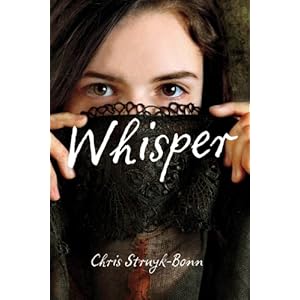
"Whisper" by Chris Struyk-Bonn (book review)


I received a copy of Whisper from Librarything.com in exchange for an honest review.  The book was an advance copy, it will be available in Canada in April 2014.


Whisper is the first novel from Chris Struyk-Bonn, and hopefully not her last.  The dystopian setting of Whisper is certainly meant to be of our own society, and is not a terribly distant future either.  We find the titular character living in the woods with other rejects, individuals who have been cast off from a society which shuns those with any physical defect.  Whisper’s crude but happy life in the wilderness is abruptly ended when she is reclaimed by the father who rejected her, and brought to his house to work as a servant.  As Whisper is traded from hand to hand into a life in the highly polluted cities, she retains her dignity and independence and never surrenders the hope of returning to her simple camp and the only family she has ever known.

I am a very picky consumer of dystopian fiction, as it is one of my favorite genres.  But I thoroughly enjoyed reading Whisper.  While some of the ideas are not completely original (very much reminded me of The Chrysalids), the characters are what really make the story.  Whisper herself is a highly interesting and endearing character, and the supporting casts of characters have strong personalities as well.  Character development is really what made this book for me, as the reader can see how various experiences and maltreatment impact Whisper and shape her personality and future encounters.  There are a few odd moments of inconsistency, but they are not enough to detract from the overall growth of the characters.

My only complaint about Whisper are the few odd places where the story goes off on a tangent that seems to be completely unnecessary to advancing the plot.  One example of this is a scene where Whisper is rescued during transport to the city, but then quickly returns to her captor.  I found this scene to be contrary to Whisper’s established character, and almost completely unnecessary.  The explanation of trying to protect her family of cast-offs just doesn’t work in this scenario, as she is being sent by her biological father into a life of begging in the streets.  Being fully aware of the terrible destiny that awaited her, I would have thought Whisper would take her chances in the familiarity of the woods and try to return to her kin, rather than going back to her dastardly, creepy uncle who was transporting her.  The whole scene just didn’t fit.  There is a later scene where Whisper is briefly jailed in the city, which I also felt could have been omitted without damaging the storyline.

Despite a few inconsistent and unnecessary scenes, overall I was very impressed with Chris Struyk-Bonn’s inaugural effort.  The story is interesting, moves at an appropriate pace, and the characters are fascinating and multifaceted.  I look forward to reading more by Chris Struyk-Bonn, and recommend Whisper to anyone who enjoys dystopian fiction.  

Tuesday, 18 February 2014

Feeling all the feels - Bridge to Terabithia (book review)

Oh, the feels.

Book club selected "banned books" this month, and I thought it would be a natural fit to pick a children's book, because so many of the books that are challenged every year are for kids/YA.  This is probably because people are worried about their fragile little minds being unable to handle basic life concepts. Like swearing.  Or people having same-sex parents.  Or death.  Or other reminders of reality.

Now some of this concern is justifiable.  Some concepts are confusing for children.  My 5-year-old niece, who has experienced death in the passing of her great-grandmother, is a prime example of this.  Her understanding of death as it stands right now is that she doesn't want people to die because then there will be skeletons.  She doesn't understand it in terms of the cessation of life or that she will miss the person if they are gone, she just REALLY dislikes the idea of there being any skeletons in her vicinity.  But when children have a misunderstanding like this, it is an opportunity to teach them at their level about the concept, rather than pretend the concept does not exist.

Really, it is this whole "at their level" thing that throws people off and is usually at the source of the debate on most challenged books.  It's the same with other topics like suicide, drug use, drinking, sex, etc.

And this leads me to the banned book which I read for this month, The Bridge to Terbithia.

The main reason that this work has been banned in the past is because it features death as a predominant part of the story.  Which in my own personal (professional librarian) opinion, is a dumbass reason to ban a book.  Apparently people have also taken exception to the book because the main character Jess uses the word "lord" outside of prayer, and that the book portrays secular humanism in a potentially positive light. 

(Excuse me while I go clutch my pearls.)

Clearly, most of these objections to Bridge to Terabithia are products of the time from which it was written, in 1977.  More than forty years later our sensibilities have changed... or so we would like to think, but this book was among the most challenged in America between 1990-2000.  I couldn't find a stat on it since then, but I'm sure calls for censorship didn't stop just because they 90's did.

Now I've been referred to as a crazy-left-wing-hippie-plant-eater more than once in my life (actually), but I'm going to go ahead and say that these objections are pretty much ridiculous.  But really, most objections and challenges to books ARE ridiculous.  It always comes down to fear and misunderstanding of a different person or group (i.e.- foreign people, people of other religions, people with a different lifestyle, teenagers, etc.) 

Honestly I found Bridge to Terabithia to be pretty tame.  Yes there is a death (I'm not going to say who and ruin the book, although if you read the back cover it's pretty obvious), but I think there is more controversy to be had with the book's quiet subversiveness (a la Catcher in the Rye, only much less whiny).  Terabithia is really all about building the world you want to live in when you don't want to live in the world that authorities have built for you.  Which is also exactly what makes this a wonderful book.  If like me you somehow escaped your childhood without having read this one, I highly recommend it as a fast read with a real emotional punch.

Thursday, 2 January 2014

This is the real world! - A holiday with two dystopian YA reads

Ah, the Canadian winter.

For reasons I'd rather not get into, I found myself stuck on semi-operational passenger trains full of awful children in the middle of the prairies for what added up to several DOZEN hours over the course of the holiday season.

At any rate, with such extravagant amounts of time on my hands, you had to know I would get lots of reading done.  And I did.

Here are a pair of reviews for the YA dystopian novels I read, which were highly suitable to the situation if I do say so myself...

#1: The Interrogation of Ashala Wolf - Ambelin Kwaymullina


I wasn't sure what to expect from this particular YA read, which I snagged as an advance copy through LibraryThing (the rest of you will have to wait until April 2014 to get your mitts on this one).  This is Ambelin Kwaymullina's first novel, but the premise sounded very interesting.  In a post-apocalyptic world where there are regular folks, there are also individuals who are known as "illegals", who have special abilities which many fear will upset the Balance which keeps society intact.  One such illegal is Ashala Wolf, whom we meet at the outset of the novel as she is being brought into a detention centre for interrogation.  Now this seemed to me like an odd place to start the novel.  I really wanted to know more about her deeds before being brought to prison, but that is actually part of "the twist" so I can't say anything more about that!  However at the time this aspect of the novel really bothered me, I had a hard time getting into the story for about the first 100-pages.  And I can't tell you what part of the book changed my mind without spoiling the whole thing for you, but trust me when I say that the action in the book picks up dramatically, and that it was a very enjoyable and exciting read from there on out.  There are many twists and turns and leaps through time, and the ending is really quite satisfying.  I am very glad that I didn't give up on this one, it was worth the initial struggle and turned out to be a really interesting story in the end. If you enjoy dystopian fiction like The Hunger Games or Matched, then I would recommend you pick up a copy of The Interrogation of Ashala Wolf once it is released.


#2: More Than This - Patrick Ness


As some of you may already be aware, I am guilty of being a HUGE fan of Patrick Ness.  I absolutely devoured his Chaos Walking triology, despite the fact that it is probably the goriest set of teen books I have ever read, and I'm not usually a big fan of violence in my reads.  But his stories are so riveting and the violence is sometimes just an integral part of the action.  Also, if you haven't read A Monster Calls then you should, it's not his usual vein of writing but it damn near broke my heart and not many books can almost make me cry, but it was damn close.
Anyway, onto the matter at hand.  Ness' latest YA release does not disappoint as the author delivers us into a world that keeps the reader guessing right up until the end. When young Seth drowns he does not meet his end as one would suspect, instead he wakes up in the old home where he used to live, completely alone.  At least for a little while.  Seth strives to understand how his reality has changed, while at the same time trying to figure out his new environment and avoid forces that don't want him to know the answers.  And I'm sorry for that terrible description of the plot but I really just can't tell you what happens in this book because it would totally ruin it for you if I did.  Trust me when I say that it is a great read and keeps you guessing right up until the end.  Ness' consciousness of relying on old tropes is directly addressed within the book, so while some aspects of the story are not entirely original ideas, the way that they are put together is exciting and fresh.  And the ending!  I'm a fan of great endings that don't let you know exactly what happens after the book ends.  This one really reminded me of the lake scene at the end of Haruki Murakami's Hardboiled Wonderland and the End of the World; the protagonist steps into the unknown with no clear answer for the reader as to where exactly he will wind up.  
While I think I was more engrossed with the Chaos Walking books, I found More Than This to be an exciting and engaging read, and would highly recommend it to anyone who enjoys YA books, dystopian fiction, and works with GLBTQ leads.

So that's it for now.  Book club is reading classics this month, so excuse me while I go completely switch gears...

Friday, 13 December 2013

Dietary variety and "The Importance of Being Earnest"

So be honest, are you getting enough fibre in your diet?
Have you been eating your fruits and vegetables?
How about when it comes to your choice in books?
Have you been reading the same genre over and over?
Are you mentally constipated???

:)

Visual aside, the reason why the open genre book club I participate in functions the way it does is because humans are creatures of habit.  If I wasn't forced to read a different genre every month, you know that I would simply gorge myself at the buffet of teen literature.  Which is the sugary, over-processed dessert of the book world.  It's a tub of Cool Whip.  So every once in a while we have to select a genre which is more like eating a big bowl of bran flakes.

You know, for the sake of dietary variety.

For November/December's iteration of the book club, we read plays.  Literary health food.  (Unless you're talking about the inedible pablum that is Arthur Miller.  Which we are not.)  In my case we are talking about The Importance of Being Earnest by the late, great, and faaaaabulous Oscar Wilde.

All hail Oscar, king of the Dandies!

The problem here however is that I haven't had to analyze a play since high school.  It is a genre that I really don't read very often.  So I will have to be brief...

The Importance of Being Earnest is highly quotable and undeniably the work of Oscar Wilde.  If you have read any of his other works or are even familiar with some of his quotes, Earnest is instantly identifiable as being one of his.  His witty phrases and jokes are a delight, the short 75-page play is a quick read with a rapid storyline filled with hilarious banter.  I have never seen this play performed, but I would very much like to and I think it would be even more enjoyable if I was able to watch it rather than read it.

This is my major sticking point with plays of any kind I suppose: they just aren't meant to be sat down and read.  They are meant to be seen, it is the purpose for which they were created.

So as far as genres go, I probably won't be adopting plays as a regular part of my reading diet.  But as far as Oscar Wilde goes, I absolutely love his work and will continue to adore it in all its forms.

Monday, 4 November 2013

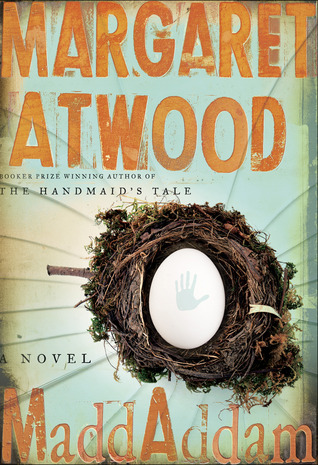
The Sadness of a Series: Margaret Atwood's "Maddaddam" (book review)

Trilogies fill me with a weird sense of regret.  There is a certain sadness that comes with finishing the story, and knowing that's there all there is and all there is going to be. No more hope for sequels when sequels have already been had.

In the case of Margaret Atwood's Oryx and Crake, I never really expected there to be a sequel.  Sure it has a cliffhanger ending, but I thought the ending was perfectly suited to the tone and subject matter of the story and was in no need of further explanation.  Yet I eagerly devoured both The Year of the Flood and MaddAddam, the latter of the two being my read for this month's bookclub, where our genre (so to speak) was women writers.


Loose ends are sewn up nicely in MaddAddam, which unifies the stories found in the previous two volumes and brings together the Crakers, Snowman/Jimmy, and the MaddAddamites.  Snowman/Jimmy, who spent a good portion of the last two books hovering around death's door, is nursed back to health and plays a pivotal role (albeit somewhat inadvertently) in uniting the Crakers and MaddAddamites in the common goal of protecting themselves from the vicious criminal painballers.  I really enjoyed how the book focused on the perspective of Toby, who was introduced and served as one of the main characters in the previous book.  It was also wonderful to finally get a Craker perspective in the form of Blackbeard.  In the early part of this book, I found the Crakers too be too much comic relief (who is Fuck?  hee hee), but Blackbeard's point-of-view helps to balance this out a bit.

And so now comes the mourning.  Well, mourning is maybe a little dramatic.  Now comes the wistfulness of knowing you've come to the end of a great story.  If you haven't read any of this trilogy, I highly recommend it, the first book Oryx and Crake is the best of the bunch and is really an outstanding work of dystopian fiction.  As always, I recommend these books most of all to people who are not Margaret Atwood fans.  There is something universal about these books in their appeal that reaches even to those (like me) who were force-fed Atwood poetry in high school and disliked it.

Trust me on this one.

Monday, 16 September 2013

When subject matter gets serious: a pair of book reviews

While I like to consider myself a "jane of all genres", I have often been diagnosed as a great reader of adventures and comedy.

However, this past week I found myself keeping company with two VERY heavy, emotional and deeply saddening works of fiction.  This was unusual for me not because the books were sad (call  me a cold-hearted bitch but I really do enjoy a good unhappy ending), but because I will rarely follow a heavy, emotional book with a second book of the same nature.  I typically like to break them up and intersperse some lighthearted children's works or maybe a cute graphic novel in between these emotional heavyweights.  Just for the sake of my emotional health, and my supply of tissue.

But without further ado, I present the two reviews.  The first is a classic of Russian fiction and criticism of Stalinist repression; the second is a work of YA fiction that forces the reader to confront their deepest fears.


One Day in the Life of Ivan Denisovich by Alexander Solzhenitsyn

This book was my pick for book club this month, for which our selected genre was fiction in translation.  I have developed a great love for mid-20th century Russian fiction and satire due to the wonderful, insightful writings of Mikhail Bulgakov.  Beyond his most widely read The Master and Margarita, Bulgakov has a substantial list of works which were not published until long after his early death, due to his overwhelming criticisms of life in the Stalin-ruled USSR.  With Bulgakov as the foundation for my experience of Russian literature, I had some expectations going into One Day.  And all of my expectations were met and greatly exceeded.  One Day takes the reader into the bitter, unmerciful world of a Soviet prison camp through the eyes of Ivan Denisovich Shukov, a former soldier who is imprisoned after being accused of going AWOL.  By the time the reader is introduced to Ivan, he has already been incarcerated for several years.  Solzhenitsyn spares nothing in his description of camp life, from Ivan's rejection at the medical facility to the meagre meals and bitter cold in which the imprisoned men are forced to work.  But the part that really hits the reader square in the gut and conscience is how grateful Ivan is that this day of his is a particularly good one.  He is so thankful that he managed to stay out of solitary confinement and received an extra tiny piece of black bread.  The last few pages of this book describe how Ivan drops off to sleep in a state of contentment.  This is so difficult for the reader to digest after reading the descriptions of all the awful abuses of camp life.  The contrast pulls on the emotions and adds even more to the reality of the experience and the appreciation of those awful circumstances that Solzhenitsyn instills in the reader.  Overall, this book was a difficult read due to the all too true descriptions and subject matter of the work, but absolutely worth reading. 


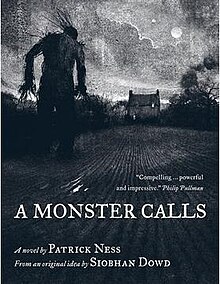
A Monster Calls by Patrick Ness
 
 Having read Patrick Ness' Chaos Walking triology, I also had expectations when approaching A Monster Calls, which I had been meaning to read for a very long time.  A Monster Calls is just so incredibly different from Ness' other work, I quickly disregarded what I remembered from those books and looked on this one with fresh eyes.  In this disturbing teen read, a 13-year-old boy is visited by a monster which forces him to confront the disturbing realities of his life.  And I can't tell you anymore than that without completely spoiling the book, which I wouldn't want to do because EVERYONE should read it.  Books don't often make me cry, but this one had me darn close at the end.  The writing is lyrical even though it is told from a 13-year-old perspective, and the accompanying illustrations are perfectly suited to the tone of the story.  The story is simultaneously beautiful and horrifying, it is truly a unique work of fiction which conquers very difficult subject matter without being trite or melodramatic.  The message of the story is incredible, and I very honestly would recommend this book to anyone who is capable of feeling feelings, because A Monster Calls will make you have so many of them.

So after all that strenuous emotional reading, what am I reading now?  I'm working on some non-fiction reads on information consumption for an online course I'm taking.  Talk about switching gears!

Ciao for now.

Thursday, 8 August 2013

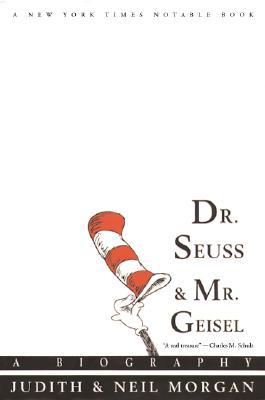
Dr. Seuss & Mr. Geisel (book review)

I don't often read biography.  Prior to picking up Dr. Seuss & Mr. Geisel by Judith & Neil Morgan for last month's book club, I think the last time I read a biography was when I was doing my undergrad (almost 10 years ago now).  Usually this just isn't a genre that catches my eye at the library.  I'm a prolific reader of fiction, and non-fiction has to be really, truly special in order to get read.  Now I probably should be striving to advance variety in my interests and be an eclectic reader of all the things, but dammit, I like what I like.

Regardless, here is a short review of the aforementioned Seuss biography.


When we pulled biography as our theme for July's book club, my initial desire was to read a book about my favorite silent film actor, Buster Keaton.  However, the biography at the library was a coffee table book, and I had rode my bike that day, so the massive, picture-laden tome was out of the question.  Instead I put in an ILL for a biography on my favorite children's authour, Dr. Seuss.

Written about five years after his death in 1991, Dr. Seuss & Mr. Geisel presents an easy-to-understand, chronological view of the life of the highly productive and much loved children's book authour.  There are about five pages of photographs included with the book, which are also ordered chronologically and show the development of Ted Geisel from imaginative boy to the man who captured all of our imaginations.

As with many people who lived across the span of the 20th century, what is nearly as interesting as the biographical aspects of Ted's life are the glimpses into the society in which he grew up and lived.  As a descendent of German immigrants, we see how racism and bullying permeated American society during the World Wars and impacted Ted's personality.  The rise and fall of prohibition is also well-documented here, through the impact it held for Ted's father and grandfather, who worked as brewers.  Even the advent of various technologies, from typewriter to electric typewriter to computer, occurred during Ted's lifetime as held sway over his works.  The two Morgans do an excellent job of demonstrating not only the development of Ted as artist and writer but also just how much changed in America and around the world over the course of Ted's lifetime.

The only place I hold issue with this biography is in its tendancy to mince words and be a bit euphemistic when it comes to Ted's failings and shortcomings.  The big one being that the book does not explicitly say that he began a relationship with Audrey Dimond while they were both still married to other people, and even which contributed to the suicide of his first wife, Helen Palmer.  This is simply implied.  I also didn't like how Helen's suicide was treated as some sort of noble act, as opposed to it being the death of a woman who was not only heartbroken but who had suffered with a painful ailment for over ten years.  While I understand that it is a biography about Ted, I felt it was insensitive to treat Helen's death as simply a means to progress and advance Ted's life and his relationship with Audrey.

So in conclusion, I'm not sure how to rate this book as far as biographies go due to a lack of benchmarks in my own reading experience.  I very much enjoyed the book overall, and it's merits as a highly-readable and accessible biography outweigh some of the issues I took with the authours being overly tactful.  Overall, I would recommend this biography for any Seuss fan who wants to find out a bit more about the man and his beloved characters which have entertained both children and adults for several generations. 

Tuesday, 2 July 2013

China Mieville's "Un Lun Dun" (book review)

Occasionally, I come across a book that absolutely reaffirms my love for reading and reminds me that it is not only an awesome hobby, but one that has the ability to completely transfix and commandeer my regular life while I'm in its sway.  To the dereliction of duties like keeping the house.  Or showering.  Or eating.  Or sleeping...

China Mieville's Un Lun Dun is one of those awesome books.

Creepy cover though.

I had been waiting for a while to read Un Lun Dun, which was hanging out on my "to read" list, and finally got around to it just recently.  And I am so incredibly glad I did.  This book absolutely pulled me in; it was one of those books that I quite literally had difficulty putting down. It seemed that no matter what I was doing, I was thinking of ways to solve the problems of its characters and anticipating storyline twists.

What I think is so enchanting about Un Lun Dun is that the story is based around familiar tropes, but goes a completely different route with them.  The so called "chosen one" (shwazzy!) and her best friend are pulled into an alternate world, where the chosen one is expected to save everyone from a maniacal, conscious mass of pollution known as the Smog.  But when Zanna the chosen one falls flat on her face almost immediately out of the gates, and it becomes the task of her "sidekick" and best friend Deeba to become the un-chosen hero and save the parallel world of UnLondon.  I loved this because it is so relateable for the main audience of this book, younger teens.  These teens can very much understand the position of someone who feels overshadowed by their peers, and feel powerless to change their situation.  It is really refreshing to get to enjoy this special adventure from the perspective not of that special, singled out individual (think Percy Jackson, Harry Potter, etc.), but of a very normal and ordinary girl. Many tasks and exciting adventures later, it is Deeba's brain and her quick thinking that save the day, adding yet another layer of appeal as she did not require any special supernatural powers to succeed, only her own wits.  These features add greatly to the realism of what is definitely a fantasy work.  The character of Deeba is so realistic and maintains her normalness despite keeping company with a diverse cast of oddities including half-ghosts, personified words, killer giraffes and animate milk cartons. 

The book might be perhaps a bit too scary for a younger crowd, under the age of about eight, but the length of the work (about 220 pages) might also be prohibitive for that age group.  This read is ideal for the younger teen, and for anyone who really likes a good adventure with a healthy slice of nail-biting suspense and the occasional bit of humour.  I'm really looking forward to reading some of China Mieville's other works, and hope they are as wonderful and exciting as Un Lun Dun.

Friday, 21 June 2013

About 10000 leagues over my head - it's poetry month

There is a fat worm in these waters
in these lands a predatory worm:
he ate the island's flag
hoisting up his overseer's banner,
he was nourished from the captive blood
of the poor buried patriots.
- "Munoz Marin" by Pablo Neruda

Book Club pulled poetry this month.  And I picked a book so far over my head that I pretty much drowned in it.

Poetry and I have had a tumultuous relationship at best.  And most of that was because I was forced to memorize Keats and Shelley in Jr. High, followed by an overly generous helping of Atwood in High School.  

But having to pick a book, I decided I'd like to read something by Pablo Neruda.  I took interest in Neruda after reading The Dreamer by Pam Munoz Ryan.  So this seemed like a good chance to actually read some of his poetry...

Which is how I ended up with Song of Protest.


There are so many things wrong here, and sadly, they are all things that are wrong with me.  I can't even begin to actually review this collection of political poems.  Firstly, I feel like this is really a set of poetry which would have been EXTREMELY powerful in the time period and place when it was written, which was more than 20 years before I was born.  Or, it would have a great deal of meaning if I was really familiar with South American history.  Which I also am not.  And lastly, it was just hard for me to wrap my head around some of the subject matter in the poems, particularly Neruda's overt bromance with Fidel Castro...

So this was just one of those things that I didn't get.  Totally my bad.

But we can't all be experts in everything, so I guess I'll let myself get away with not having a handle on poetry.  After all, I'll always know a lot about parallel parking and 1980's Japanese pop music....


(pikara, pikara...) 

Tuesday, 11 June 2013

Patricia Wrede's "Thirteenth Child" (book review)

I have to admit, I have been very lax lately in my reading of books for younger teens.  I'm so keen on the 15-18 older teen books that I've been reading them almost exclusively over the last few months.  So recently, when I was at the library with no particular books in mind, I decided to peruse the books aimed at the 12-14 crowd.  And that is where I picked up Patricia Wrede's Thirteenth Child.

I love the cover!
  
Thirteenth Child is difficult to classify in terms of its genre.  It could be called a fantasy book, or magical realism, or historical fiction, or perhaps most aptly, alternative historical fiction.  Thirteenth Child (and the series that follows it) is set in the early days of the American Wild West.  Except the frontier is populated with a wild variety of magical and non-magical creatures, as well as some ice-age holdovers like mammoths and sabre-toothed tigers.  And the creatures are not the only ones who possess magical abilities, humans possess these abilities as well to varying degrees. 

Wrede does an excellent job of keeping enough historical accuracy to make the time period recognizable, but at the same time integrating these interesting, magical aspects of the storyline. The story's heroine, Eff, is considered by some to be an unfortunate, cursed thirteenth child.  The story follows Eff as she leaves her home community at a very young age, and strives to leave behind the stigma of her birth order and prove herself to not only be a good person, but one who is safe for others to be around.  The story covers a fairly large stretch of time, starting with Eff at age five and ending at age 18.   While I found some of the progression through time to be a bit lurching, this doesn't damage the overall quality of the story. 

I very much enjoyed Wrede's descriptions of the people, settlements and creatures in this re-imagined America.  There is just the right amount of history and magic in this tale to make it approachable and appealing to younger teens.  And with Eff's brother Lan and his friend William filling in substantial roles, and getting into several serious misadventures, this work has appeal to teen boys as well as girls.  Overall, Thirteenth Child is an engaging story, and I will likely give the sequels a try as well.

Happy Reading.  :)

Tuesday, 21 May 2013

Runaway Devil (Book Review)

"The most disturbing outcome of the trials is that neither JR nor Jeremy Steinke ever took responsibility for the death of Jacob.  Only they know for certain what happened in that house, and one of them is not telling the truth."

The book club genre for this month was true crime.  Honestly, I've not read very much of this genre.  That may have to do with the fact that I'm generally a very fiction-heavy reader (reading 2 of them at the same time as this book) and if I am reading about a true crime, it is usually involving an air crash incident.*

*Sidenote:  If I could do it all over again, I would totally be an air crash investigator.  Mayday is my favorite TV show, and I think my personality as someone who is ridiculously organized and meticulous (read: anal retentive) in their work would lend itself well to that type of career.  But I never pursued the sciences as actively as I should have.  *sigh*...

 I wanted to pick a book about a Canadian crime, and I ended up choosing Runaway Devil: How Forbidden Love Drove a 12-Year-Old to Murder Her Family by Robert Remington and Sherri Zickefoose.


The story of Runaway Devil was a really big case in Alberta back in 2006, when 12-year-old JR and her 23-year-old (!) boyfriend planned and carried out the murder of her parents and little brother in their Medicine Hat home.

While obviously this was a disgusting crime, I want to focus mostly on the quality of the investigative writing and the style of the book itself rather than passing too much judgement on the individuals involved in this real-life horror story.  Remington and Zickefoose are both journalists who covered the story for the Calgary Herald.  And while the journalistic writing style often falls prey to sensationalism, in this case the authors have managed to do a pretty good job of avoiding the melodramatic.  Which is challenging considering the subject matter of forbidden (not quite) teenage love and family murder.  Remington and Zickefoose do an excellent job of discussing the backgrounds and lives of the murderers equally, and provide many different perspectives and sources in their analysis of the crime, ranging from court records to social media postings and recorded conversations.  The book is not a difficult read from a vocabulary standpoint, but from my experience true crime books don't tend to be exceptionally difficult in their language.  The book is for the most part put together in a sensible chronological fashion, and there weren't too many places where I was confused about which point in time they were referencing.  I also appreciated that they included photos of the parties involved (excluding young offenders) and provided an update on the situation as far as it was available when the book was published.

So while true crime is not my usual choice in genre, I felt that Runaway Devil was a generally well-written investigative look at a truly horrible multiple murder.  I would recommend this book to fans of the genre, or those with an interest in crime and current events in Alberta.

Monday, 8 April 2013

Jonas Jonasson's "The 100-Year-Old Man" (book review)

"If you've ever stepped in a heap of sticky, very fresh elephant shit then you'll know it's virtually impossible to keep your balance."

I am a complete sucker for a comedy.  I absolutely love books with a good sense of humor, and if they are able to literally make me laugh tea out my nose, all the better.  I think the reason I love humorous books so much is because they are one of the very few types of books that actually manage to elicit an emotional response from me.  As I've mentioned before, I'm not the kind of person who gets "scared" or "moved to tears" by books.  They just don't trigger those kinds of reactions for me.  But a truly funny book has the power to make me actually laugh out loud, and that is why I love them so much.  Christopher Moore and Neil Gaiman are among my favorite authors for these reasons.  And while Gaiman is probably considered fantasy before comedy, if you've read Good Omens then you know exactly why I classify him as a humor writer as well.

It's been quite a little while since I've read anything truly humorous.  I've been on a bit of a teen drama, adult drama, too much drama tilt as of late.  Which is why I was thoroughly, truly glad to read Jonas Jonasson's The 100-Year-Old Man who Climbed out the Window and Disappeared.

Great cover too, in my opinion.

In order to obtain a copy of this book from my local public library, I actually had to wait over three months to get to the top of the holds list.  There were literally dozens of people waiting to read this recent bestseller.  Conveniently for me, book club this month picked bestsellers as our genre, so 100-Year-Old Man ended up pulling double-duty in that regard and as comedy relief.

In the 100-Year-Old Man, centarian Allan Karlsson decides to start over and climbs out the window of his retirement home on his 100th birthday.  The highly idiosyncratic senior citizen then proceeds on a romp across the Swedish countryside which comes to include stealing a suitcase full of money, accidental murder, and a motley crew of accomplices including a thief, an evangelized fraudster, and a farmer and her elephant.  Obviously, mayhem ensues.

100-Year-Old Man does not proceed in a strictly linear fashion.  Episodes from unpolitical Allan Karlsson's life are all highly political, as he plays a role in some of the 20th century's key events and gains the ear of many prominent figures across several continents.  The total ridiculousness of both Allan's overly lucky history and his current adventure is part of what makes the book very enjoyable and outrageously funny.  Yet Allan's frank and honest nature makes his tales seem believable.  With child-like honesty Allan blows up his childhood home, insults Stalin and nearly causes multiple international incidents, all without a hint of malice.  The overall result is a book that is just pure fun; one that cannot be taken too seriously or analyzed too deeply.

I would highly recommend Jonas Jonasson's The 100-Year-Old Man who Climbed out the Window and Dissapeared to anyone who enjoys literature in translation, or a good solid laugh.  It is a highly joyful, exciting book with a tidy happy ending.  Most of all, it is perfect light reading if you're experiencing a bit too much seriousness in your life or literature.

Thursday, 21 March 2013

Angela Carter's "The Magic Toyshop" (book review)

I love YA books.  I love how teen protagonists fall so perfectly into that golden zone where they are still young and energetic, but also have a surprising amount of freedom that allows them to get involved in all kinds of crazy adventures.  However, too many YA books in a row is a lot like living off a diet of junk food.  It's really sweet at first, until it becomes too much of a good thing.  Once your vocabulary begins to slide and the brain starts to atrophy, you have to read "real" literature for a while.

And that doesn't mean you have to go subject yourself to Rushdie or Dostoevsky or some other similarly obtuse and overwhelming work.  Coming out of a YA tear is a great time to pick up an old favorite author who you've meant to revisit, but you've just been so busy with The Hunger Games.
So to get out of my YA rut, I turned to Angela Carter.  Angela Carter was a writer of poetry, short stories, magical realist and feminist fiction and children's books, who unfortunately passed away quite young, at the age of only 51.  She was active as a novelist from 1966 until her death in 1992.  I'd only read one of Carter's works before, and it was Nights at the Circus.  I absolutely LOVED it, so I figured that Carter would be good for another shot.  From Carter's substantial repertoire, I  selected The Magic Toyshop.

Splendid creepy reading.
 The Magic Toyshop self-describes (on it's back cover) as a "gothic novel".  Now let me be honest and say that I honestly had no clue what that meant.  Thanks to the power of Google, I looked it up, and it turns out that a gothic novel is one which combines horror and romance.  Which is a remarkably accurate description of this book.  The protagonist is a teen girl, who after a midnight misadventure in the garden finds herself suddenly and unexpectedly orphaned.  With her well-to-do parents gone, Melanie and her siblings are sent to live with their icy giant of an uncle, Phillip, along with his silent wife Margaret and her two brothers Finn and Francie.  Things quickly get scary and WEIRD for Melanie, as magical realism elements start to kick in she discovers the monstrous manipulations of her uncle upon his family.  As Melanie registers as a target for Phillip's wrath, she also inadvertently proves to be the catalyst which drives massive changes for the family.

This is not a story for the faint of heart.  Many awful things befall the family, right up to the very end of the story (which I really can't give away, but it is a heck of an ending).  But interlaced in the terrible events are moments of tenderness between Melanie, Margaret and Finn which show the reader a new definition of what makes a family, and how people react when placed in dire circumstances.  Carter has such magnificent control of the English language, her prose is much closer to poetry.  Lyrical phrasing and distinct imagery combine to give the reader a very authentic experience.  And in a book which moves at quite a slow pace, Carter's masterful writing drags the reader in, and makes this book almost impossible to put down.

Fans of Margaret Atwood would almost certainly enjoy The Magic Toyshop.  I would also recommend this work highly to fans of magical realism in the vein of Banana Yoshimoto, or to anyone who enjoys a lyrical, engaging work of fiction.